|
|
NOTES on the technique of the painters we copied |
back to home page
|
|
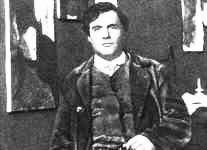
Amedeo MODIGLIANI
Amedeo Modigliani will forever be one of the most gifted sketch artists - he never knew what an eraser was. With a pencil he could start a curved line on his pad and with a couple of motions of his hand, and maybe a few slash marks, his subject was all but completed. His portraits in oils were done in the same fashion. With a small brush dipped in diluted black or dark brown, he would quickly outline his subject, including eyes, nose, mouth, hands, body position and surrounding props, if any. He then painted in and around the lines as he wished, usually with short perpendicular and wishy-washy strokes. He favoured round brushes with straight bristles and rarely worked with more than five colours for any painting. Of those five, prussian blue and chromium oxyde green were two of his regulars. Modigliani's portraits were done in the same or the following day in most cases - three to ten hours of work ( there are, almost certainly, some exceptions). Modigliani painted impulsively and relatively unconcerned, mushing colours together instead of blending them. His paintings - perhaps more than those of any other painter we found - must be seen in person in order to realise the crudeness of his touch and the genious with which he was able to make it work for him.
|
||
|
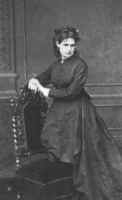
Berthe MORISOT
Berthe Morisot admired and was greatly influenced by Edouard MANET, a very close friend and later her brother-in-law, but she fought against this influence and there is definitely a great deal of difference in the way the two of them applied paint. Morisot's paint was habitually very thin with sudden strokes of thick, and she preferred piling up transparent layers rather than painting into wet paint - at which Manet was such an expert. An interesting thing was the fragility and lack of body of her paint : even her thickest strokes were of a paint that lacked real strength. Unlike Manet, she avoided using any ingredients that added onctuosity and elasticity to paint.
Berthe Morisot was a true romantic artist, that is to say she saw a vision of her subjects (almost always women and children) in her mind and completely subjected her materials and training to whatever necessary in order to achieve a finished painting that represented that vision.
|
||
|
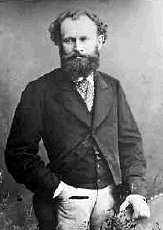
Édouard MANET
Edouard Manet had definite techniques, ones he in a true sense invented and perfected. He was one of the most talented technicians in the history of painting ; and as one can say that there is something delicate that must come through in Morisot's works, one can say that there is something very virtuoso that must come through in a Manet. It's the look of succeeding everything with the minimum of effort and the maximum of brio - as he himself always tried to do. Manet was far from perfect however, and he admitted this to himself and to others by his open use of the palette knife for scraping down, often repeatedly, areas of his paintings that did not magically appear as he wished. Manet had only friends and admirers among his colleagues (all the other impressionists), who felt no reason, and certainly no desire, to challenge his remarkable ability to cajole paint into doing whatever he wanted. Manet's paint was famously of a medium thickness with a yogourt-like texture, and his strokes were long whenever they could be and applied wet-in-wet whenever possible. After Manet's early death, Morisot, Renoir, Monet and others realised the great loss to modern painting, for Manet had been their sympathetic band-leader and he was still, in their hearts, the painter's painter.
|
||
|
|
art - katroz Claude GUILLEMET & Jonte TYCHMAN 4, Rue du Capitaine Maignan 35000 RENNES FRANCE
SIRET : 514 569 664 00014 Maison des Artistes : G 88 99 72 ADAGP : 108 72 53 E-mail : cguillemet@orange.fr |
|